Hello, everyone. Welcome to wearware, your go-to site for shaping the future of the fashion and apparel industry.
This time, we’re diving deep into the world of "rendering." You’ve probably heard the term often when working with 3D computer graphics—but do you know how it works and what it means? Many people use it somewhat vaguely.
In this article, we’ll break down the importance of rendering in the fashion industry, from the basics to more advanced, practical insights. Whether you’re already working with 3DCG or just thinking about getting started, this guide is for you!
Table of Contents
- What Is Rendering?
- Ray Tracing: The Dominant Rendering Method in Fashion
・Key Features of Ray Tracing
・Ray Tracing Engines - The Savior of Knitwear 3DCG: 3D Loop Simulation
- How 3D Loop Simulation Works
- Benefits of Using 3D Loop Simulation
・Accurate Loop Representation
・Realistic Yarn Fuzz Representation - Understanding the Key Features of Rendering
What Is Rendering?
Rendering is the process by which a computer processes numerical data to generate images, sounds, or videos. In 3DCG, it refers specifically to calculating elements like light sources, colors, shadows, and textures to turn 3D models into photorealistic images or high-quality videos. Rendering is widely used in fields such as film, gaming, and animation, and creating high-quality visuals often requires significant computing resources.
Ray Tracing: The Dominant Rendering Method in Fashion
There are several types of rendering methods, including ray tracing, radiosity, Z-buffering, and scanline rendering. Among these, ray tracing has become the dominant technique in the fashion industry.
Key Features of Ray Tracing
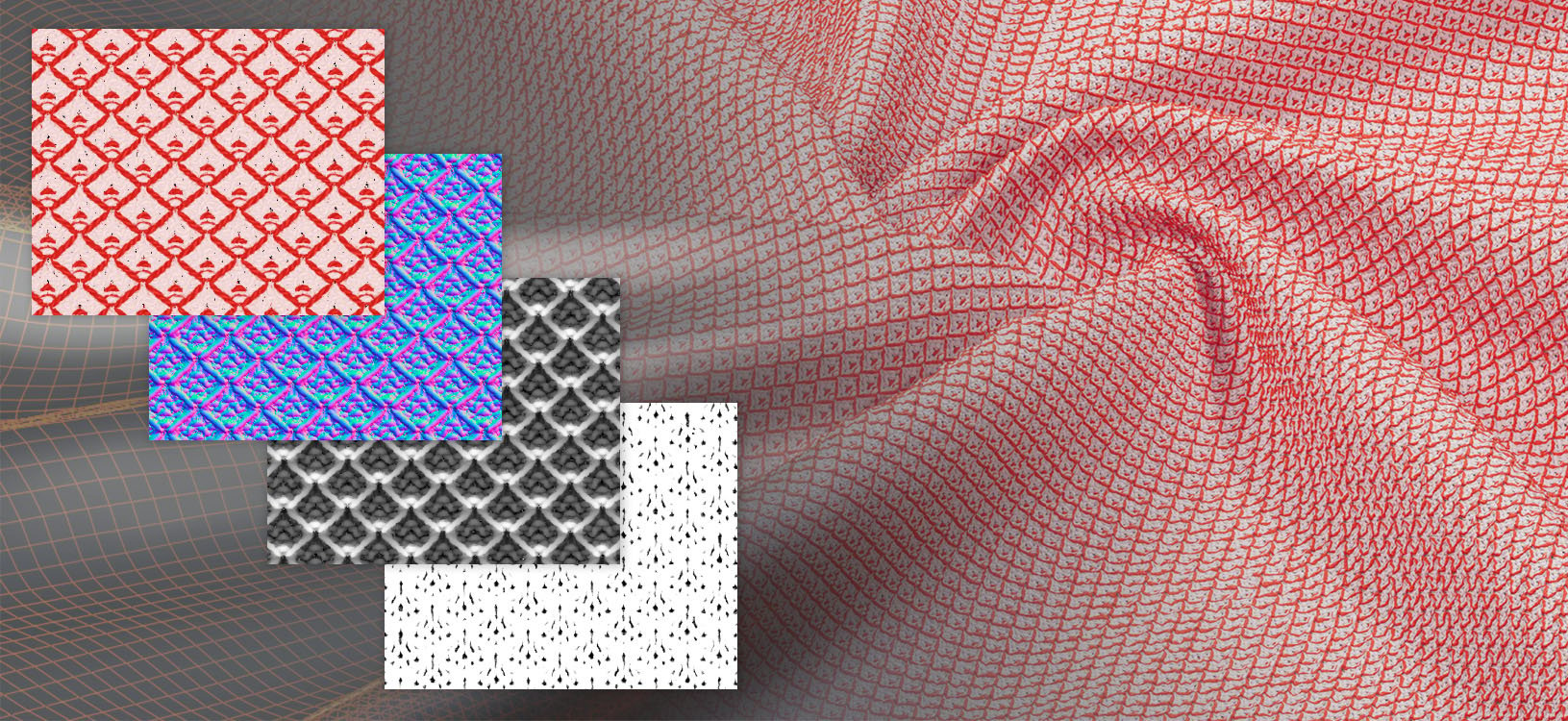
As the name suggests, ray tracing is a technique that tracks the paths of light rays. It simulates factors such as the amount and angle of light, as well as refraction and reflection, to create images and videos that closely resemble the real world. Ray tracing excels at rendering shadows—areas blocked by objects naturally appear darker, adding a sense of depth and realism. It also accurately calculates mirror reflections and the refraction of transparent materials, enabling the expression of complex materials. When combined with texture maps, this method makes surface textures look even more lifelike.
For more on texture maps, be sure to check out this article.
A Complete Guide to Texture Maps: Why Optical Properties Matter in Apparel 3D Design
A Complete Guide to Texture Maps: Why Optical Properties Matter in Apparel 3D Design U3M is a very convenient data format that brings together information related to 3D materials, making it especially useful for creating virtual samples. Meanwhile for this session, we will be taking a closer look at the optical properties of U3M.
Related articles
Ray Tracing Engines
There are various ray tracing engines—such as Arnold, Octane Render, Blender Cycles, and Redshift—each with its own unique characteristics and applications. Choosing the right engine depends on the specific needs of your project.
V-Ray
One of the most well-known ray tracing engines in the fashion industry is V-Ray, developed by Chaos Group Ltd. in Bulgaria. V-Ray can be used as a plugin with many 3DCG software applications and delivers high-quality rendering. It supports a wide range of software, including 3ds Max, Maya, CLO, Browzwear, Style3D, and APEXFiz®, making it a key rendering engine for major 3DCG tools used in the fashion industry.

From the Chaos official site (https://www.chaos.com/vray/application-sdk/fashion-design)
Unreal Engine
In recent years, alongside V-Ray, Unreal Engine has been gaining attention in the fashion industry’s 3DCG workflows. Developed by Epic Games in the U.S., Unreal Engine was originally known as a rendering engine for video games, but it is now supported by fashion software such as CLO, Browzwear, and Style3D. One of its biggest advantages is its high-speed rendering capabilities—unlike V-Ray, which often requires waiting for processing, Unreal Engine allows users to view high-quality images in real time.

From the Unreal Engine official site (https://www.unrealengine.com/en-U)
The Savior of Knit 3DCG: 3D Loop Simulation
Notably, this technology was recognized in Japan’s 2024 National Commendation for Invention Awards, organized by the Japan Institute of Invention and Innovation, receiving both the Institute of Invention and Innovation Chairman's Award and the Invention Implementation Achievement Award for its innovation for “the invention of a 3D knit simulator that accurately represents knitted fabrics based on design data.”
How 3D Loop Simulation Works
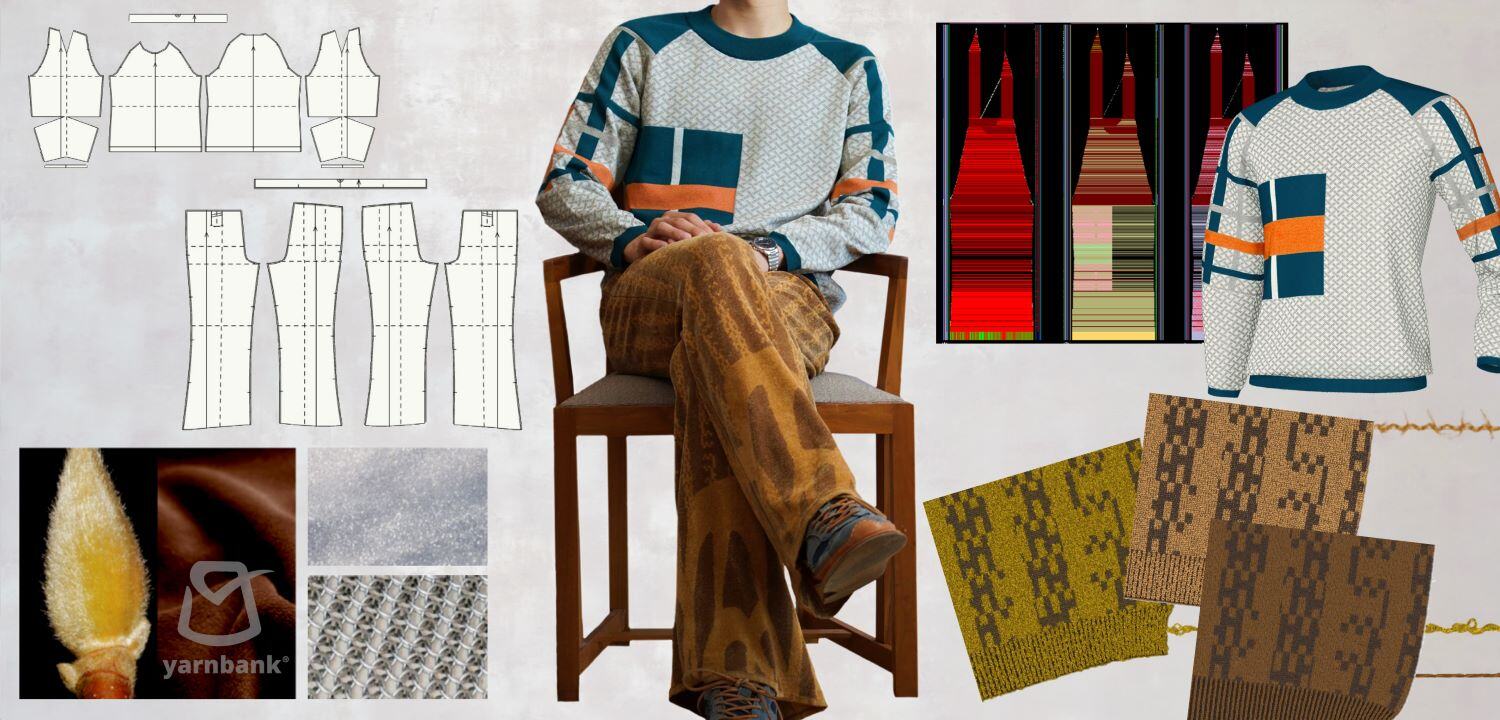
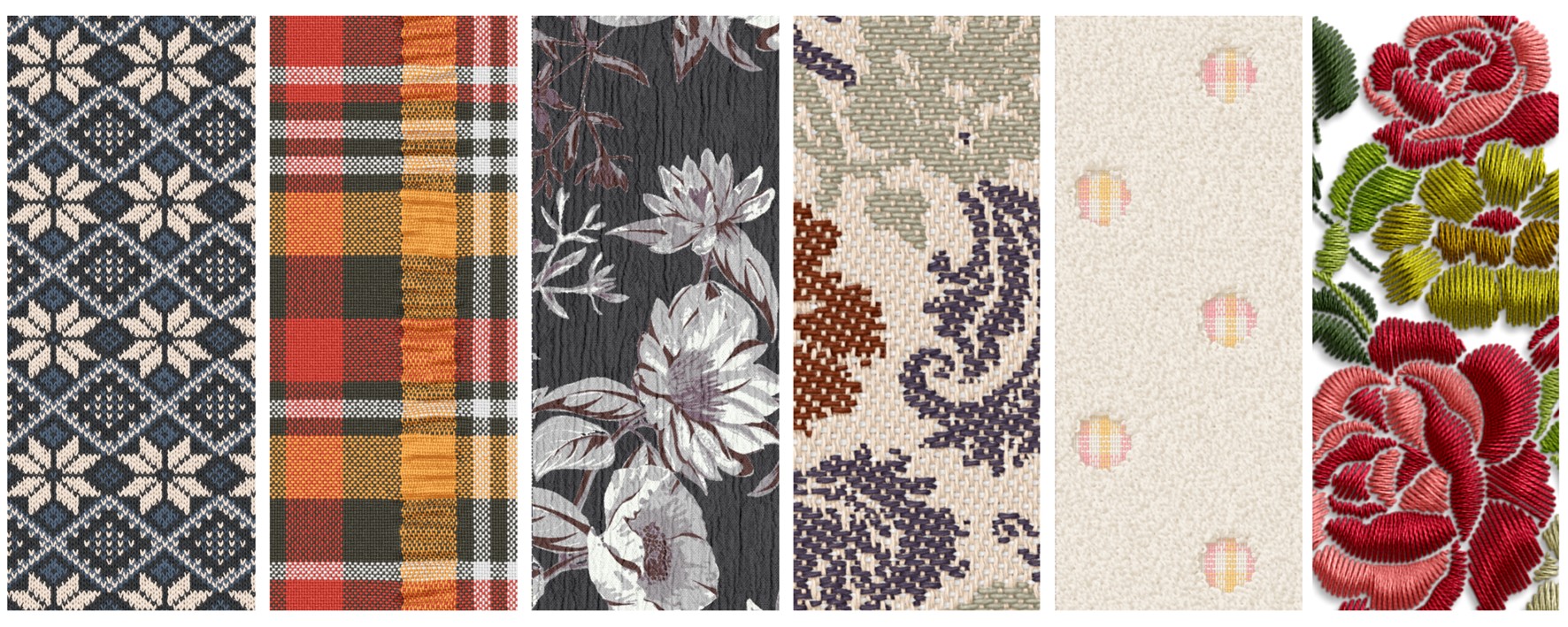
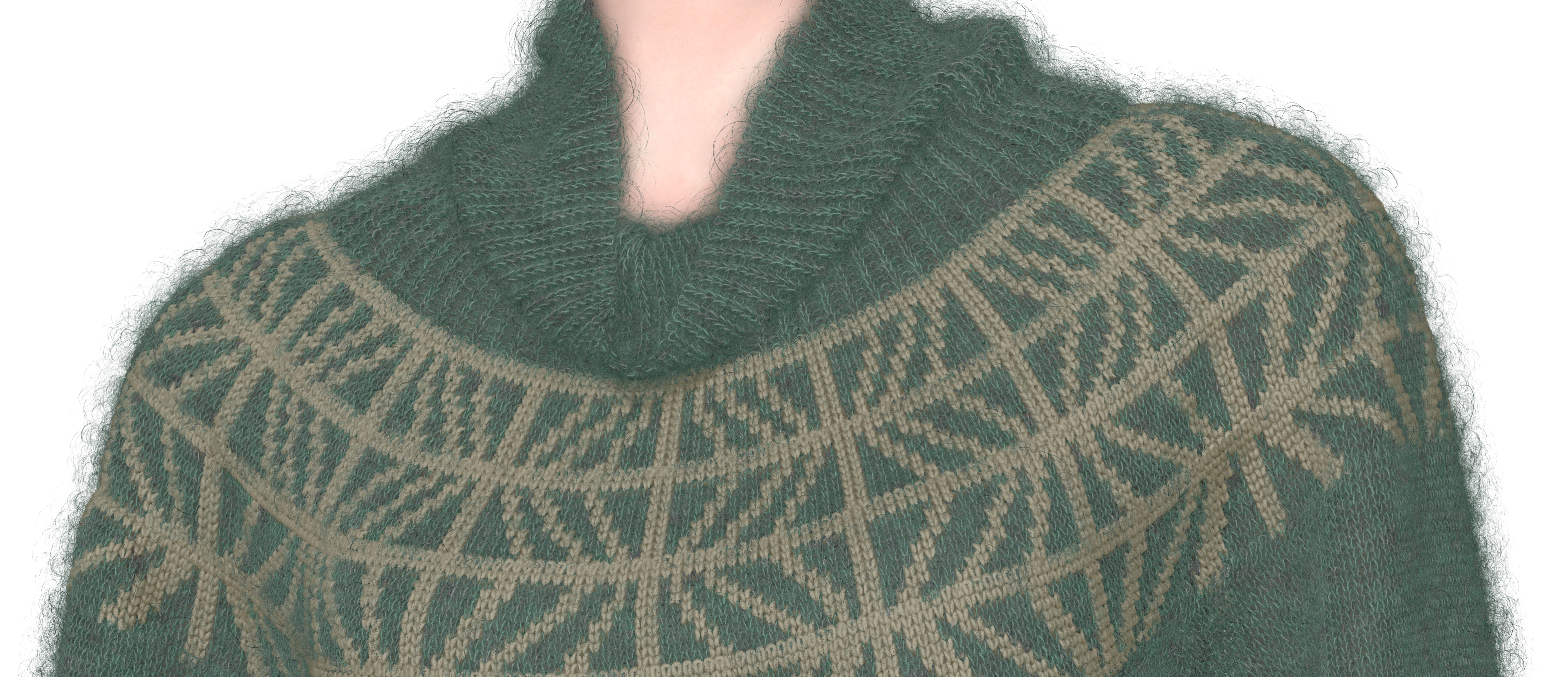
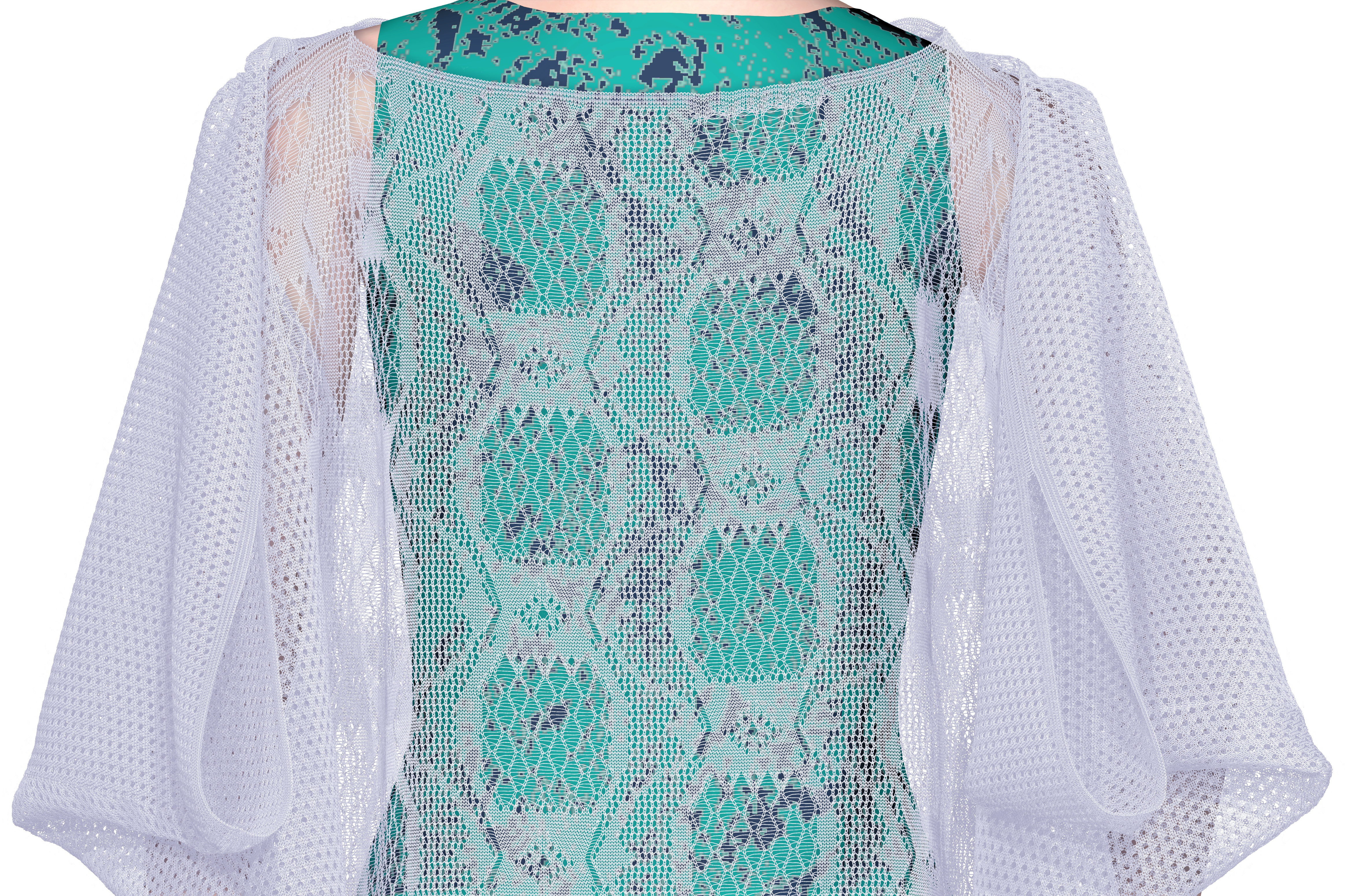
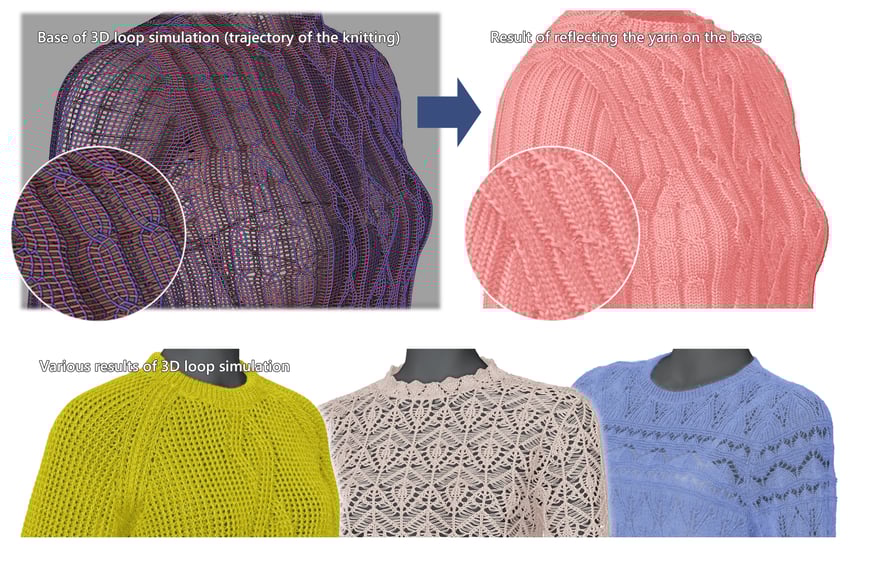
3D loop simulation uses a unique rendering method unlike any other software. In this approach, the computer generates CG images by physically calculating each knit loop (stitch) in 3D space. In typical 3DCG software, garments are recreated by mapping fabric textures onto patterns before rendering, relying on visual tricks to create a sense of realism. However, this method has clear limitations when it comes to knits, which feature complex bumps, loops, and fuzzy textures. The result often looks like a printed image of knit fabric on clothing, rather than actual knit material.
Meanwhile, with 3D loop simulation technology, a virtual knitting machine is set up inside the computer, and actual knitted fabric is generated using knitting programs. By calculating where each individual loop ultimately settles in 3D space, the system can automatically produce ultra high‑definition CG images with a level of quality equivalent to real knitwear.
You can read a detailed explanation and development story here.
SHIMA SEIKI received the Institute of Invention and Innovation Chairman's Award and the Invention Implementation Achievement Award at the 2024 National Commendation for Invention Awards, organized by the Japan Institute of Invention and Innovation, for the invention of a 3D knit simulator that accurately represents knitted fabrics based on design data.
Related Link
Benefits of Using 3D Loop Simulation
Accurate Loop Representation
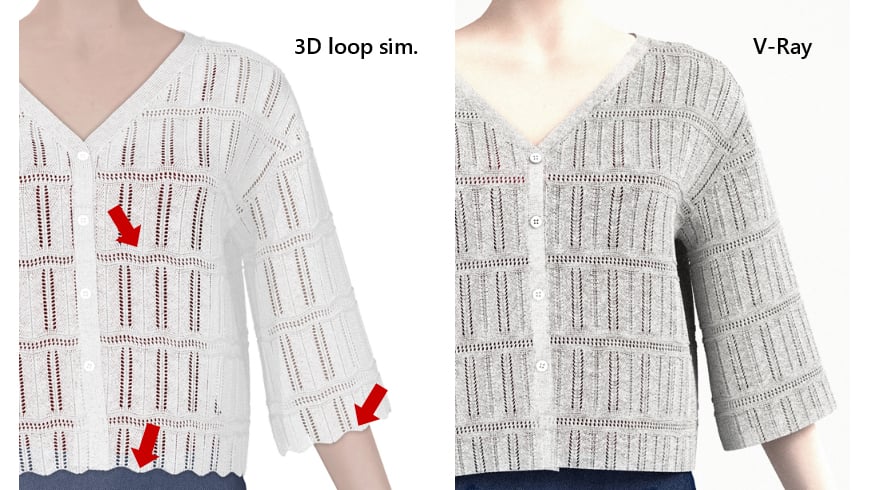
As mentioned earlier, 3D loop simulation physically calculates each knit loop, taking into account four key structural factors in knitting: the distance between adjacent loops, distortion, bending in the course (horizontal) direction, and bending in the wale (vertical) direction. This allows for the realistic reproduction of knit-specific fabric undulations created by stitch structures.
In the example below, the left image shows the result of 3D loop simulation, while the right shows the result from V-Ray. The 3D loop simulation result clearly displays the wave patterns caused by the pulling effect of the knit structure, and scalloped edges can be seen around the cuffs and hem. Ray tracing, on the other hand, only maps fabric textures onto flat patterns, making this level of detail impossible to achieve.
Realistic Yarn Fuzz Representation
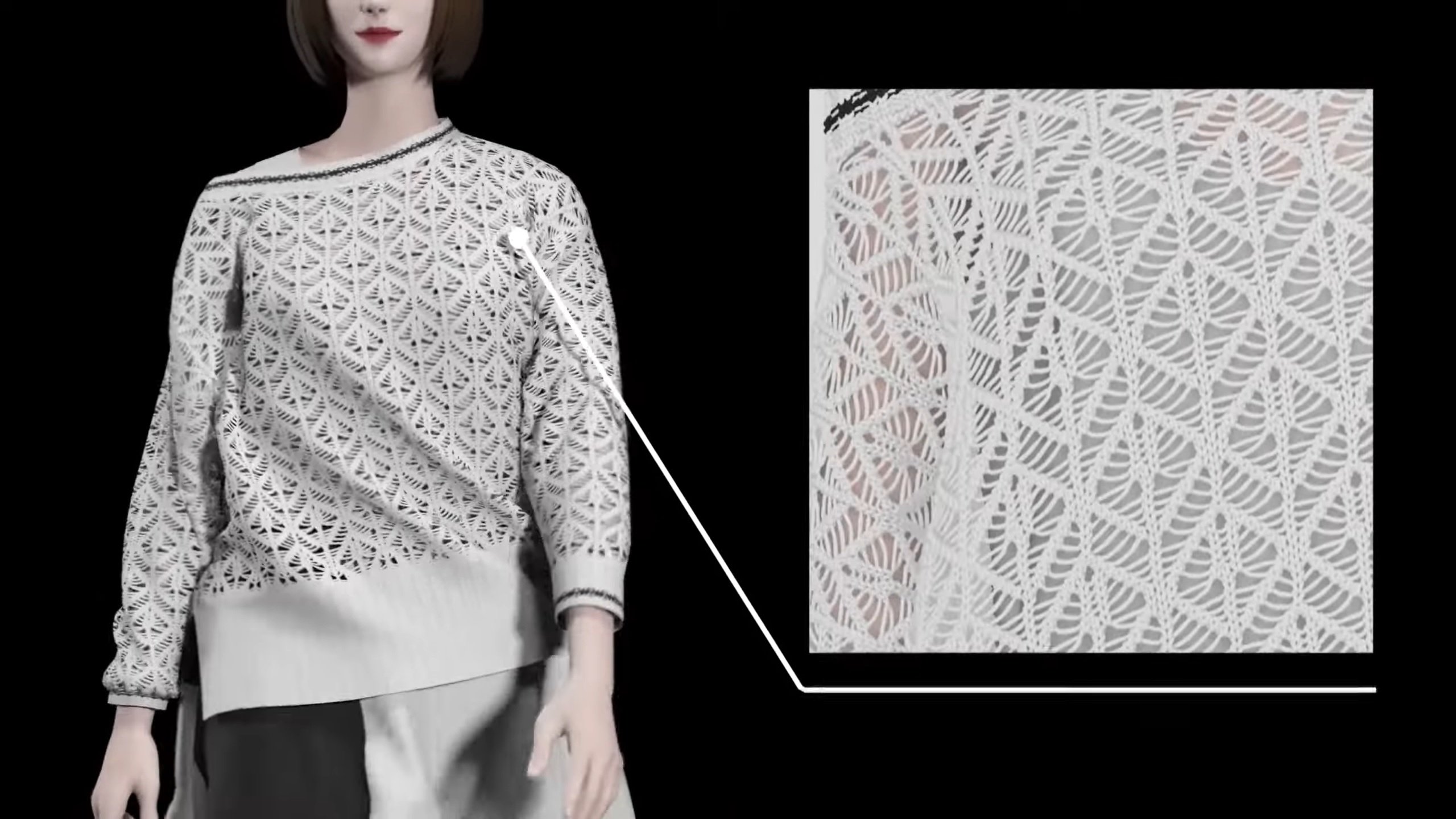
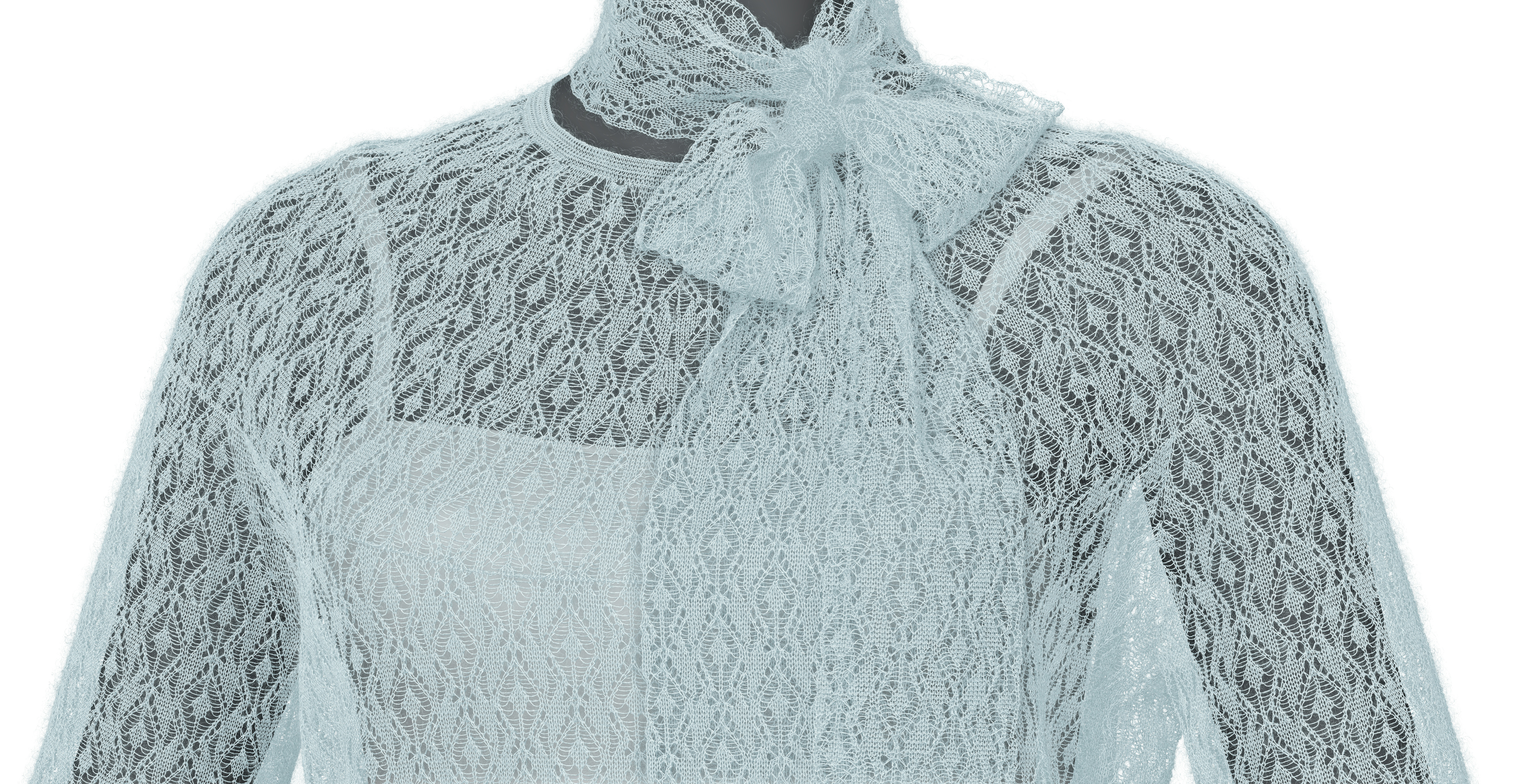
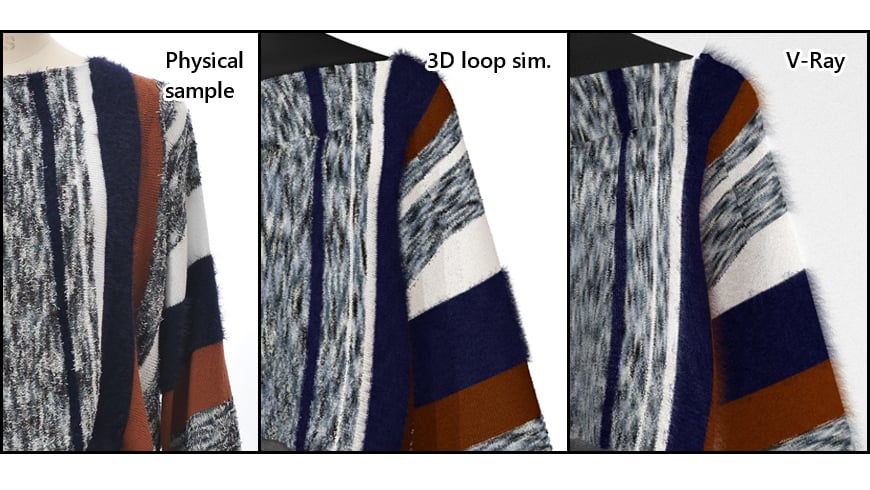
3D loop simulation allows the use of scanned data from actual yarns, enabling the faithful reproduction of their natural fuzziness. While V-Ray can simulate fuzz using its fur settings, this involves visually adjusting parameters based on preset fur to achieve a result that closely resembles the actual material.
With 3D loop simulation, if the yarn intended for the product is set before rendering, then the simulation automatically reflects its true characteristics, resulting in a realistic fuzz effect without extra effort. Additionally, unlike V-Ray, which applies uniform fuzz to the entire model and requires manual adjustments with fur maps for different color areas, 3D loop simulation lets you assign different yarns to each color zone. This means fuzz is automatically rendered only where needed, achieving both accuracy and efficiency.

4 Reasons Why You Should Sign Up with the yarnbank® Digital Yarn Sourcing Web service Today
Have you heard of yarnbank®? It's a web service that allows you to search and view yarns from all over the world. Launched in September 2020, yarnbank® is a specialized online platform for searching yarns, designed to be an invaluable digital tool for professionals involved in product planning and material sourcing in the fashion and apparel industry
Related articles

When planning fashion and apparel products, what software do you use? From CLO3D, Browzwear and Optitex to the familiar Adobe suite, there are certainly many options out there. This time we introduce APEXFiz®, a design software that is extremely useful for everything from planning and production to e-commerce.
Related Article
Understanding the Key Features of Rendering
Rendering plays a crucial role in 3DCG. By using techniques like "ray tracing" and "3D loop simulation" selectively, you can recreate textures and fine details as needed.
"Ray tracing" simulates the movement of light to produce highly photorealistic images. This technique makes textures and shadows appear more life-like, allowing for stunning visuals in presentations and promotional materials. On the other hand, "3D loop simulation" is particularly useful for knitwear, as it can accurately reproduce delicate details and textures—an invaluable tool during the planning and design stages of knit products.
In the fashion industry, understanding and applying these rendering technologies will be key to staying competitive. Now is the perfect time to deepen your knowledge of ray tracing and 3D loop simulation, and start incorporating them into your own projects and business. By harnessing the full potential of these innovations, you can shape the future of fashion to your advantage!
wearware supports the digitalization of fashion design.
Stay tuned for more updates!